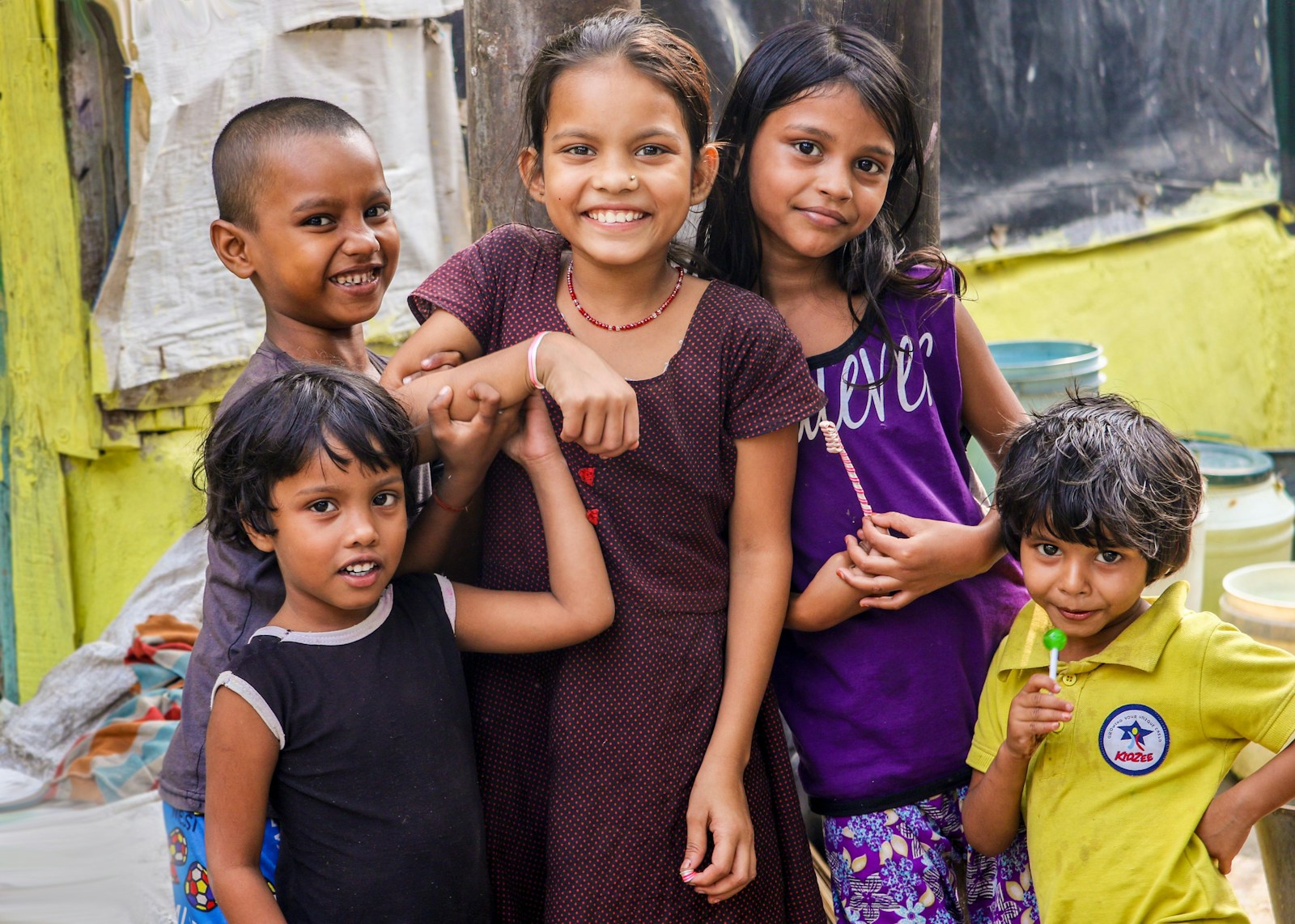
There is a persistent myth that exposing a young child to more than one language slows down their development. The myth is wrong. The research has been clear for two decades that young children handle two and even three languages without measurable cost to either, and with some specific cognitive benefits along the way.
This guide explains what a strong multilingual daycare looks like, what the research actually shows about bilingual and trilingual children, how to choose between language models, and what to expect at home as the second language takes hold.
Parents and pediatricians used to be told that introducing a second language could "confuse" a child or delay first-language milestones. Multiple longitudinal studies, summarized in the AAP's policy on bilingual children, find no such effect. Bilingual children reach the same first-word, two-word, and grammatical milestones in their stronger language as monolingual peers, often within a margin small enough to be statistical noise.
What does happen is that vocabulary in each individual language can lag slightly behind a monolingual same-age peer, while total vocabulary across both languages matches or exceeds the monolingual count. That is not a delay. That is the same number of words distributed across two systems.
Three findings have replicated reliably enough that they are worth a parent's attention.
Bilingual children, on average, perform slightly better than monolingual children on tasks that require switching attention and inhibiting a default response. The effect is small at the population level, but it is consistent across studies. The leading theory is that managing two language systems strengthens the cognitive machinery for managing competing inputs more generally.
The ability to perceive and produce sounds that do not occur in your native language declines steeply between roughly age 1 and age 7. Early exposure preserves this flexibility. Children who hear a second language daily before age 5 are far more likely to produce that language with a native-like accent later in life.
Bilingual children show small but consistent advantages on tasks that require taking another person's perspective. This is thought to flow from daily practice tracking which language belongs in which conversation.
There are four common models you will encounter in US daycare and preschool settings.
| Model | How it runs | Best fit |
|---|---|---|
| Full immersion | Day runs entirely in the target language; English is not used in the room. | Families committed to long-term bilingualism, including after preschool. |
| Dual-language (50/50) | Two caregivers, each speaking one language exclusively; alternates by half-day or by day. | Families wanting consistent English exposure alongside a second language. |
| Heritage-language reinforcement | Program runs in the family's home language to reinforce it while children learn English elsewhere. | Families whose home language is not English and want to maintain it. |
| Language enrichment | English-medium program with a specialist visiting for 30 to 60 minutes a few times per week. | Light exposure only; not enough for meaningful acquisition. |
For deep dives into specific languages, see Spanish-immersion daycare, Mandarin-immersion daycare, and French-immersion daycare. For the broader comparison across daycare philosophies, see the daycare programs pillar.
If a parent or grandparent speaks the target language fluently and uses it at home, you have an enormous head start. The research consistently finds that home exposure is more durable than school exposure alone. A 50/50 dual-language program plus consistent home use is a more reliable path to true bilingualism than full immersion with no home reinforcement.
If your home language is not English, the AAP and ASHA both recommend continuing to speak it at home, even during the early daycare years. Children do not learn English faster when parents stop using their stronger language; they learn English faster when their stronger language continues to develop a strong vocabulary base.
This is the more common case for elective immersion families in the US. The honest expectation: your child will become functionally fluent in receptive comprehension within one academic year of full immersion, and conversationally fluent within two to three. They will exit preschool well ahead of their peers in language readiness, and most of that advantage fades unless they continue language exposure through elementary school.
Plan the next step before signing. Continuation options include bilingual elementary programs (offered in roughly half of major US metros), after-school heritage-language schools, and language tutors. If you live somewhere with strong continuation options, the early investment pays off for years. Our Los Angeles, New York, and San Francisco city pages list bilingual elementary programs alongside the preschool roster.
Language-immersion preschools usually run 15 to 35 percent above the local market average. In high-cost metros, this puts full-day immersion programs at $1,800 to $3,800 per month. In mid-cost metros, expect $1,200 to $2,400 per month. Heritage-language and cooperative models can run lower, $700 to $1,400 per month, particularly when part-time or community-funded.
To estimate your net cost after the federal Child and Dependent Care Tax Credit and any state assistance, use the cost calculator. For the broader cost context, see what preschool actually costs.
Our broader daycare tour question list covers the licensing and safety questions that apply regardless of language model.
If your child has a known speech or language concern, talk to your pediatrician and a bilingual speech-language pathologist before enrolling in full immersion. Bilingual exposure does not cause speech delays, but evaluation and intervention work best when at least one clinician on the team understands both languages.
Children with diagnosed developmental delays, autism, or other speech-language concerns can absolutely succeed in bilingual settings. ASHA's clinical guidance specifically recommends maintaining home language exposure during intervention. Do not let a non-bilingual clinician tell you otherwise.
One honest note: the most powerful predictor of which children become functionally bilingual adults is not the preschool program. It is whether the family creates regular reasons to use the second language outside of school — visits with grandparents, summer trips, family friends, a tutor, a class. Preschool immersion is a strong starting block. The race is run between ages 5 and 18.
Multilingual daycare is genuinely good for young children when the program is well-staffed by fluent caregivers, the model is true immersion or true 50/50, and the family has a plan for what happens after preschool. The research does not support the worry that two languages slow a child down. It supports the opposite.
For the broader pillar, see daycare programs and philosophies. For more on choosing between programs, our comparison checklist works for any daycare model.
Compare Montessori, Reggio, Waldorf, immersion, and play-based approaches in detail.
Read the pillar → Free toolScore multiple programs side by side, including language model and curriculum.
Try the checklist → BlogThe most widely available language-immersion model in US daycare.
Read the article →Get our free daycare starter kit — the 27-question tour checklist, a cost-comparison worksheet, and what to ask about waitlists. One email, no spam.
Or jump in: tour questions · cost calculator · comparison checklist