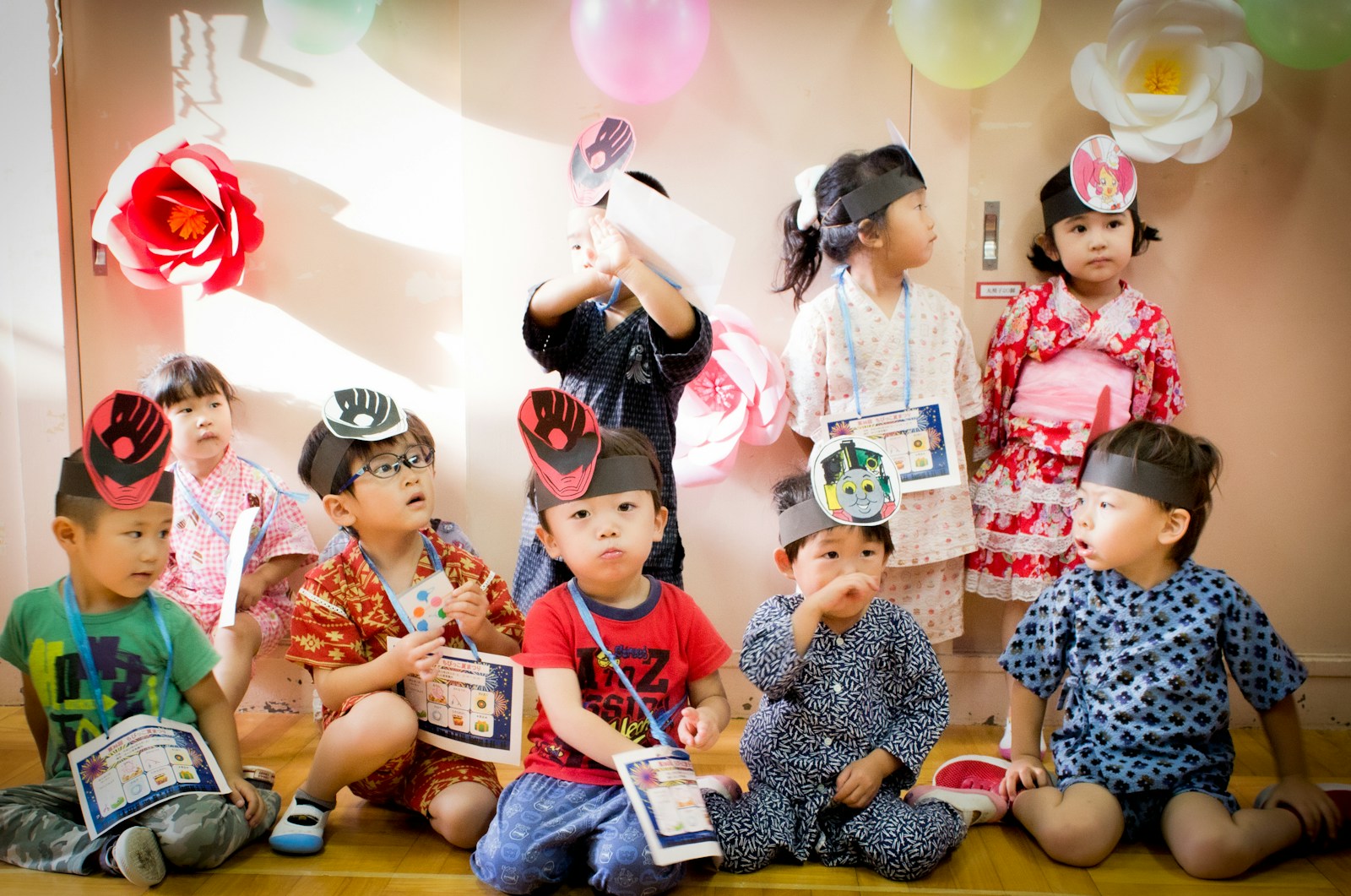
Three is the age at which daycare quietly becomes preschool. The room shifts to a longer rhythm: circle time, structured small-group activities, longer outdoor stretches, and a single midday nap that some children are starting to drop. Ratios loosen. Curriculum appears in writing. And the questions a parent asks on a tour change with it.
This guide covers what to expect in a daycare or preschool room for a 3 year old, the licensing rules that change at this age, the social-emotional milestones that matter, and the tour questions that distinguish a strong program from a weak one.
By age 3 most US licensed programs move children into a preschool classroom (often called the "3s room" or "older preschool"). The day looks different from the toddler room:
Ratios loosen at age 3. Most states allow group sizes of 16 to 20 children with two teachers. AAP and NAEYC recommend a ratio no higher than 1:10 for 3 year olds, with a total group size of 20.
| Tightest ratio (best) | Mid-range | Loosest ratio (ask questions) |
|---|---|---|
| 1:7 to 1:8 — Massachusetts, Maryland, Connecticut | 1:10 — California, New York, Illinois, Washington | 1:12 to 1:15 — Texas, Florida, Georgia |
For state-by-state detail, see our daycare ratios by state reference. Several large licensed centers in states with loose limits maintain tighter internal ratios as a marketing point, particularly accredited centers.
A 3-year-old room should have a written curriculum the program can show you on request. The most common preschool approaches in the US are:
Ask whether the program is NAEYC-accredited. NAEYC accreditation is the most rigorous national standard for early childhood programs and goes well beyond state licensing minimums. About 8 percent of US early childhood programs hold NAEYC accreditation. For a deeper look, see what NAEYC accreditation actually means.
Many daycares require children to be fully potty trained by age 3 to move into the preschool room. Some allow pull-ups or accept "in process" children. CDC milestones list daytime dryness as typical between 24 and 36 months, but the range is wide and well-supported.
If your child is not yet trained, ask the program two questions: what is the policy specifically (toilet trained vs trained with occasional accidents vs in pull-ups), and how do they support the transition? Strong programs treat training as a shared project. Weak programs treat it as a threshold the family must clear alone. For specifics on what programs typically expect, see our potty training age expectations guide.
Per CDC milestone guidance, by age 3 most children:
If your 3 year old has not yet met several of these milestones, talk to your pediatrician about a developmental screening, and ask the program how they coordinate with Early Intervention or school-district screenings. Programs that mention Child Find and IFSP/IEP integration in their tour are stronger on this dimension than programs that do not. See daycare for special needs for how to evaluate inclusive care.
Preschool tuition for 3 year olds runs lower than infant care because of looser ratios. National median costs in licensed centers run between $900 and $1,800 per month for full-day care. Major metros (New York, San Francisco, Boston, Washington DC) run $1,800 to $3,200. Lower-cost states often run $600 to $1,100.
Many states fund part-time public Pre-K for 3 year olds (commonly called "Pre-K 3" or "3 year old preschool"). Florida, Georgia, Oklahoma, Vermont, Washington DC, and parts of New York and Texas have universal or near-universal Pre-K access at age 3 or 4. Compare options on our city pages, including Atlanta and Washington DC, or estimate your net cost with our cost calculator.
For the full tour checklist, see our daycare tour questions article, and use the comparison checklist to score multiple programs side by side.
If your child is moving up within the same center, ask how the program handles room transitions. Strong centers run a phased transition over one to two weeks, with the new teachers spending time in the current room before the move. Children who are anxious about the change often settle within five to ten days. For more, see the toddler-to-preschool room transition.
If you are starting daycare for the first time at age 3, see starting daycare at three years old for a longer first-time-family guide.
One useful reframe: the goal at 3 is not academic readiness. It is a child who can separate from a parent calmly, hold a conversation, take turns with peers, and feel safe trying something new. The strongest programs at this age focus on those four things and treat letters and numbers as a side effect, not the point.
A strong 3-year-old program has a written curriculum, an outdoor culture, a thoughtful approach to nap and potty transitions, and clear documentation of what your child does each day. Tour at least two centers, watch the teachers interact with the children for at least 15 minutes, and trust your read on warmth and consistency as much as the brochure.
For the broader view, see our daycare by age pillar and programs and philosophies. To weigh preschool against alternatives, start with daycare vs nanny vs preschool.
The full pillar covering each age from 6 weeks to kindergarten readiness.
Read the pillar → Free toolScore 3-year-old programs side by side on the dimensions that matter.
Open the checklist → Sibling articleWhat changes in the Pre-K year, and how to think about kindergarten readiness.
Read the article →Get our free daycare starter kit — the 27-question tour checklist, a cost-comparison worksheet, and what to ask about waitlists. One email, no spam.
Or jump in: tour questions · cost calculator · comparison checklist